
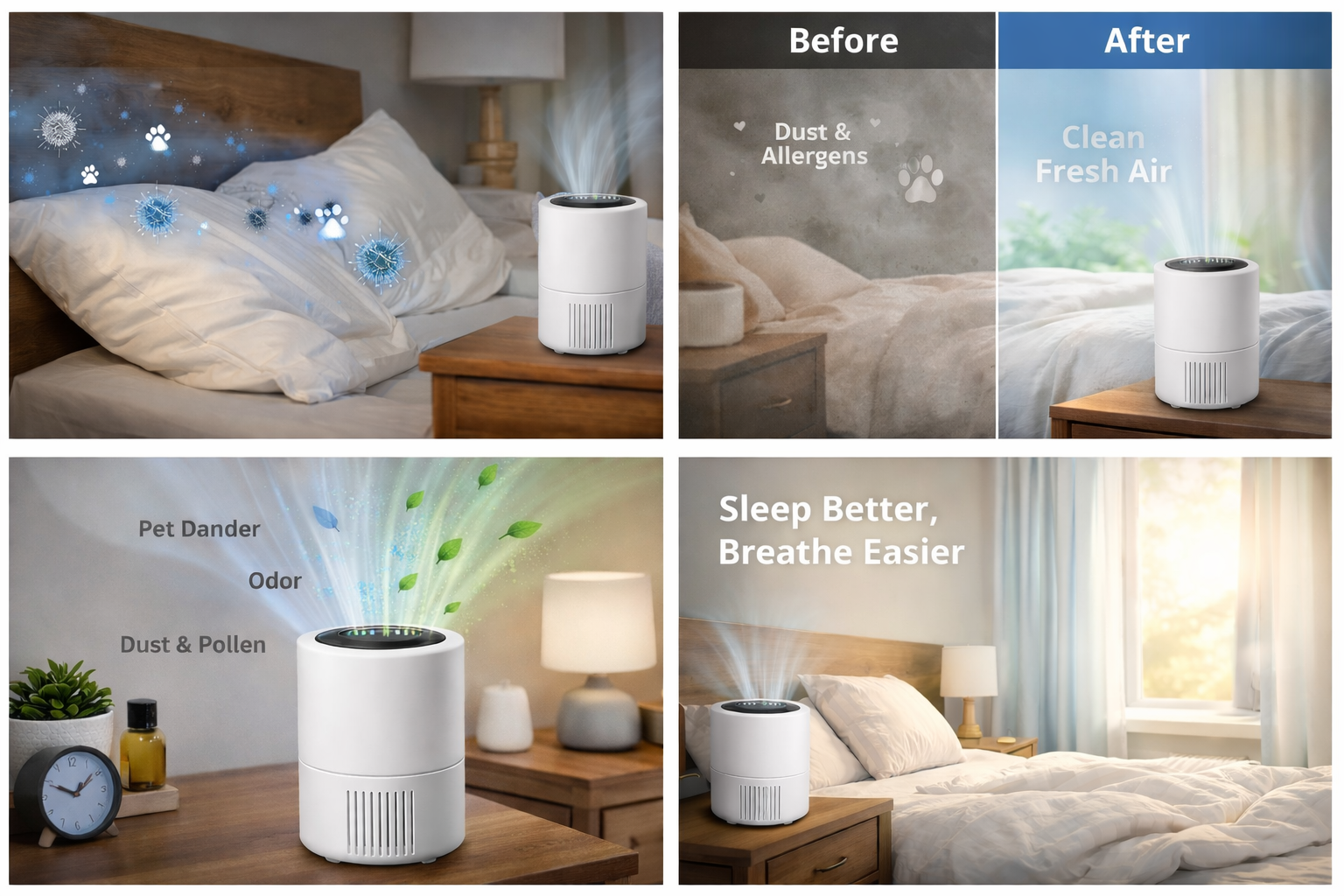
How Air Purifiers Improve Bedroom Air Quality (Real-Life Problems Explained)
Bedroom air quality has a direct impact on how well you sleep, breathe, and feel when you wake up. Many people across the U.S. experience blocked noses, sneezing, dry throats, or a heavy, stuffy feeling in their bedrooms—especially at night. In most cases, these issues are not random. They are caused by what’s floating in the air while you sleep.
Improving bedroom air quality starts with understanding the real-life problems inside modern homes and how practical solutions—like compact air purifiers—can help. If you’re already researching bedroom-friendly air purifiers, you may find it helpful to also read our detailed product-focused guide here:
👉 LEVOIT Core Mini-P Air Purifier Review for Bedrooms and Small Rooms
What Is Bedroom Air Quality and Why It Matters
Bedroom air quality refers to how clean and breathable the air is in the room where you spend 6–8 hours every night. Bedrooms often have poorer air quality than other areas of the home because they usually remain closed for long periods.
Common factors that reduce bedroom air quality include:
- Limited ventilation overnight
- Soft surfaces like mattresses and carpets that trap dust
- Pet dander circulating in the air
- Odors from daily household activities
Over time, these elements build up and affect breathing comfort and sleep quality.
According to the U.S. Environmental Protection Agency (EPA), indoor air can be significantly more polluted than outdoor air, especially in enclosed spaces like bedrooms where ventilation is limited.
Why Does Your Nose Get Blocked at Night?
Many people notice their breathing feels normal during the day but uncomfortable at night. This happens because airborne irritants become more concentrated in bedrooms after hours of limited airflow.
Dust and Dust Mites in Bedrooms
Mattresses, pillows, bedding, and carpets collect dust continuously. Even clean bedrooms release fine dust particles into the air when you move during sleep.
Pet Dander and Hair
Pet dander is one of the most common indoor allergens in U.S. households. It remains airborne longer than visible hair and easily settles into bedding and furniture.
Poor Nighttime Ventilation
Closed windows and doors trap airborne particles for hours. Fans may circulate air, but they do not remove pollutants.
For readers dealing with these issues regularly, cleaning alone often isn’t enough. This is why many people begin looking into bedroom-specific air purifiers, such as the compact model discussed in our LEVOIT Core Mini-P Air Purifier review.
How Dust, Odors, and Allergens Stay in Bedroom Air
Indoor air pollutants are often microscopic. Even after vacuuming or dusting, tiny particles can remain suspended in the air—especially in still, enclosed rooms.
Everyday Sources of Bedroom Air Pollution
- Cooking odors traveling through the house
- Outdoor pollution entering through doors and windows
- Smoke particles
- Fabric and mattress odors
These particles don’t disappear on their own. They continue circulating in the bedroom throughout the night.
How an Air Purifier for Bedroom Use Helps
An air purifier for bedroom use works by continuously pulling air through a filtration system that captures airborne particles before you inhale them.
Removing Dust and Allergens
Air purifiers help reduce dust, pollen, and pet dander that cleaning alone can’t fully eliminate.
Reducing Odors and Stale Air
Carbon-based filters absorb odors instead of masking them, helping bedrooms smell fresher over time.
Improving Nighttime Breathing Comfort
Cleaner air near the bed often leads to easier breathing, reduced nasal irritation, and better sleep consistency.
To see how this works in a real home environment, you can explore our detailed breakdown here:
LEVOIT Core Mini-P Air Purifier – Real Bedroom and Desk Use Review
Why Small Air Purifiers Are Often Enough for Bedrooms
Bedrooms don’t require large, high-powered air cleaning systems. Because of their size, compact air purifiers can effectively maintain cleaner air when used consistently.
Small bedroom air purifiers are popular because they:
- Operate quietly during sleep
- Fit easily beside beds or desks
- Provide continuous background air cleaning
If you’re comparing compact models designed for bedrooms and dorm rooms, our LEVOIT Core Mini-P Air Purifier review explains why many users prefer this size category.
Daily Comfort Improvements People Commonly Notice
People who improve their bedroom air quality often report:
- Easier breathing at night
- Less visible dust buildup
- Reduced morning congestion
- Fresher-smelling rooms
- More consistent sleep patterns
These improvements usually happen gradually, reinforcing the importance of long-term air quality management.
Common Myths About Bedroom Air Purifiers
“Opening Windows Is Enough”
Outdoor air can help, but pollen, pollution, and humidity often worsen indoor air quality—especially in urban or high-traffic areas.
“Fans Clean the Air”
Fans move air but don’t remove airborne particles. They often recirculate dust and allergens already in the room.
“Air Purifiers Are Only for Allergies”
Even people without allergies benefit from cleaner bedroom air, particularly during sleep.
Simple Tips to Improve Bedroom Air Quality
- Wash bedding weekly in hot water
- Vacuum mattresses and carpets regularly
- Keep pets off the bed when possible
- Avoid strong fragrances at night
- Use a compact air purifier consistently
Many readers combine these habits with a bedroom-friendly air purifier, like the one covered in our LEVOIT Core Mini-P Air Purifier buying guide, to create a cleaner sleep environment.
Final Thoughts
Improving bedroom air quality isn’t about quick fixes—it’s about creating a healthier space where your body can rest and recover every night. Bedrooms naturally trap dust, allergens, and odors, especially overnight.
For readers who want a real-world example of how a compact air purifier performs in small bedrooms and desk setups, our LEVOIT Core Mini-P Air Purifier review covers everything from daily use to long-term comfort benefits.