
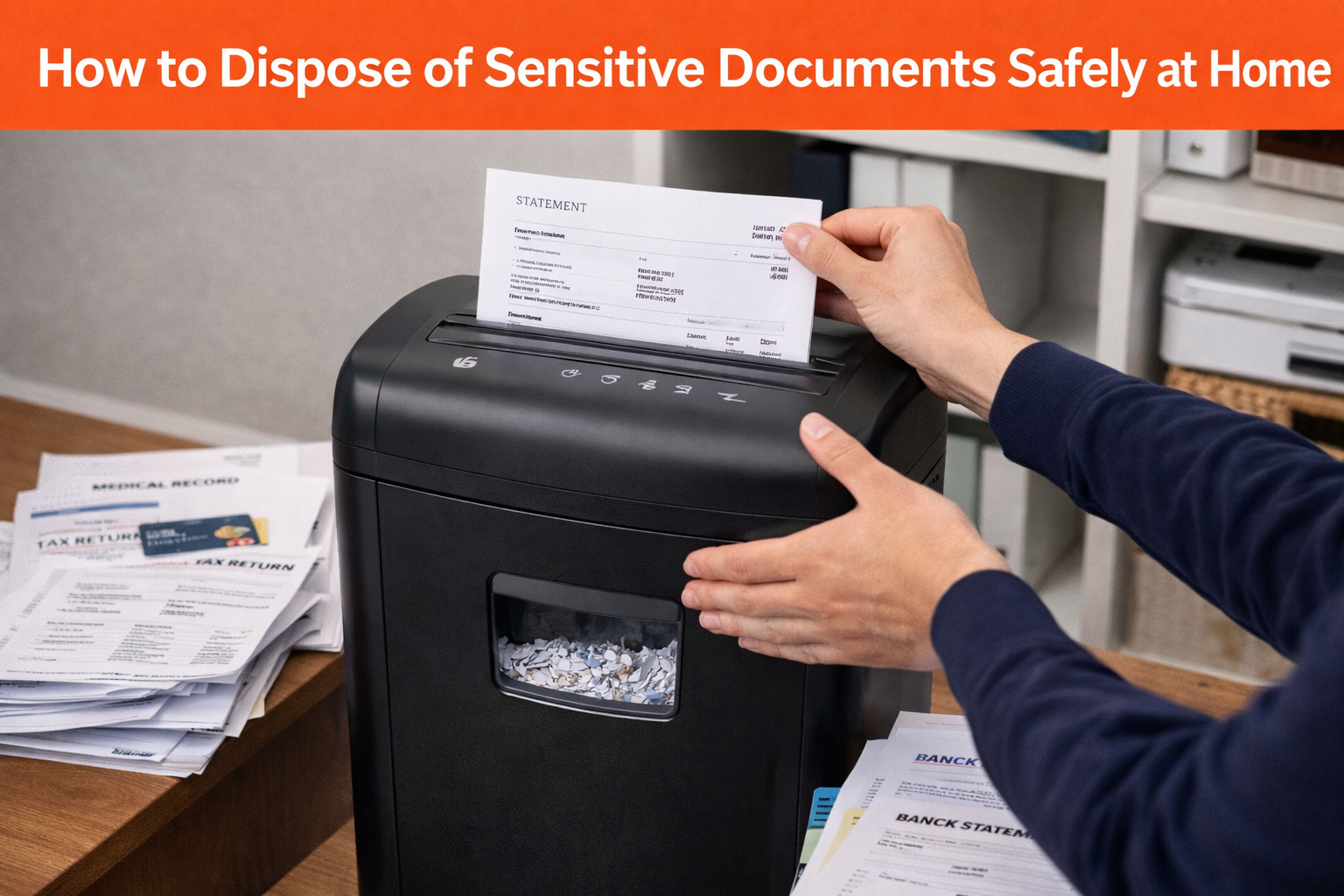
How to Dispose of Sensitive Documents Safely at Home (Complete Guide)
Why Proper Document Disposal Matters
Every household handles sensitive documents on a regular basis—bank statements, credit card bills, tax papers, medical reports, insurance documents, and more. Most people simply throw these papers into the trash, assuming that no one will ever look at them again.
Understanding how to dispose of sensitive documents safely at home helps reduce the risk of data leaks and identity theft.
That assumption is risky.
Discarded documents are one of the most common sources of identity theft. Criminals can retrieve, reconstruct, and misuse personal information if documents are not destroyed properly. Learning how to dispose of sensitive documents safely at home is a simple but powerful step toward protecting your privacy.
👉 If you’re looking for the right tools, check our Best Paper Shredders for Home Office (2026 Buyer’s Guide) for trusted recommendations.
What Are Sensitive Documents?
Sensitive documents are any papers that contain personal, financial, or confidential information. These documents should never be thrown away without proper destruction.
Common Examples of Sensitive Documents
- Bank statements
- Credit card bills
- Tax returns and salary slips
- Medical records and prescriptions
- Insurance papers
- Legal contracts and agreements
Even a single document can expose your name, address, or account details.
Common Mistakes People Make at Home
Many people unknowingly put themselves at risk by using unsafe disposal methods.
❌ Tearing Paper by Hand
Manually tearing documents does not destroy information completely. Pieces can still be reassembled.
❌ Throwing Papers Without Shredding
Trash bins and dumpsters are easy targets for data thieves.
❌ Storing Old Documents for Years
Keeping outdated documents increases the risk of loss, theft, or accidental exposure.
Avoiding these mistakes is the first step toward better document security.
Best Ways to Dispose of Sensitive Documents Safely
There are several methods available, but not all are equally safe or practical for home use.
Using a Paper Shredder (Recommended)
A paper shredder is the safest and most convenient option for home users. Cross-cut shredders turn paper into small pieces that are extremely difficult to reconstruct.
👉 For a reliable and affordable option, read our Amazon Basics 8-Sheet Cross-Cut Paper Shredder Review.
Burning Documents
Burning paper can destroy information completely, but it is unsafe, environmentally harmful, and often restricted in residential areas.
Professional Shredding Services
These services are effective for large volumes of paper, but they can be expensive and impractical for regular household use.
For most homes, owning a shredder is the most balanced solution.
Why Cross-Cut Shredding Is Safer at Home
Not all shredders provide the same level of security. Strip-cut shredders create long strips that can be pieced back together. Cross-cut shredders slice paper both vertically and horizontally, producing confetti-like pieces.
Consumer safety organizations such as Consumer Reports recommend cross-cut shredders for better protection of personal data.
(https://www.consumerreports.org)
According to the Federal Trade Commission (FTC), securely destroying documents containing personal information is one of the best ways to reduce the risk of identity theft.
(https://www.identitytheft.gov)
How Often Should You Shred Documents?
The safest habit is to shred sensitive documents as soon as you no longer need them. Weekly or monthly shredding routines work well for most households.
Documents like tax records should be kept for a specific period, but once that time passes, they should be destroyed immediately.
Recommended Long-Term Solution for Home Users
For consistent protection, a compact cross-cut shredder designed for home or small office use is ideal. It gives you:
- Full control over your data
- Immediate document destruction
- Long-term cost savings
👉 Compare trusted options in our Best Paper Shredders for Home Office guide.
Final Thoughts
Learning how to dispose of sensitive documents safely at home is not complicated—but it is essential. Small habits like shredding paperwork can prevent serious problems such as identity theft and financial fraud.
By learning how to dispose of sensitive documents safely at home, you take a proactive step toward long-term personal security.
✔ Shred sensitive documents regularly
✔ Use a cross-cut shredder for better security
✔ Avoid unsafe disposal methods
Protecting your personal information starts at home.