
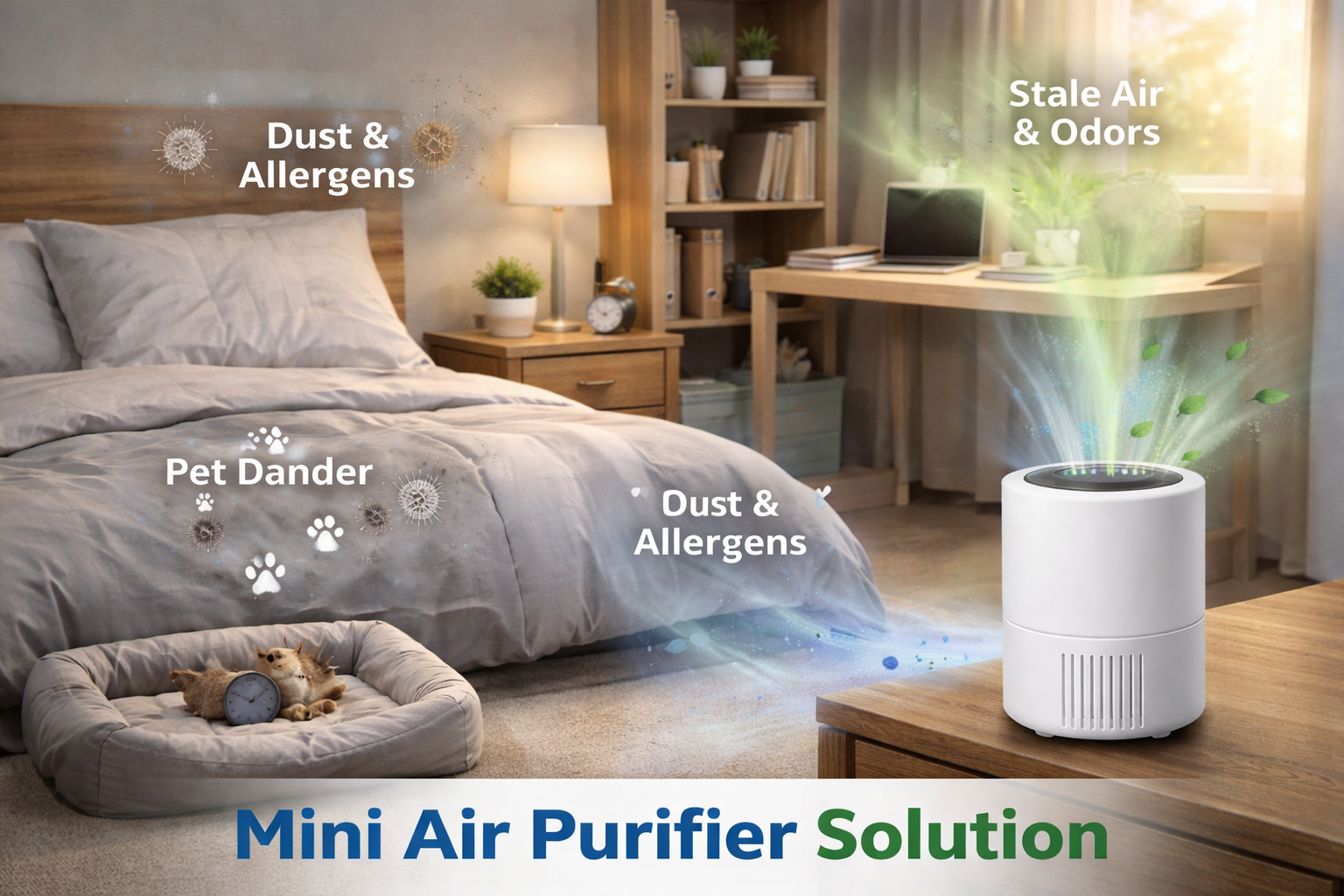
Why Small Rooms Feel Stuffy & How a Mini Air Purifier Helps
Small room air problems are one of the main reasons bedrooms, dorm rooms, and home offices feel stuffy and uncomfortable.
—even when they look clean. Many people describe it as “thick air” or a stuffy feeling that makes breathing less comfortable, especially after spending several hours inside.
This article explains why small rooms feel stuffy, how ventilation compares to air purification, and when a mini air purifier actually helps.
For readers looking for a real-life example of a compact air purifier designed for small rooms, we’ve shared a detailed review here: LEVOIT Core Mini-P Air Purifier Review
What Causes Small Room Air Problems?
Small rooms trap air more easily than larger spaces. When airflow is limited, pollutants stay inside longer instead of being replaced with fresh air.
Limited Air Circulation
Dorms, bedrooms, and offices often have:
- Closed doors and windows
- One-way airflow
- No cross-ventilation
Without fresh air exchange, stale air builds up quickly.
Dust, Fabrics, and Soft Surfaces
Beds, curtains, carpets, and upholstered furniture collect dust and release it back into the air when you move around. In small rooms, these particles stay concentrated instead of spreading out.
People, Pets, and Daily Activity
Breathing releases carbon dioxide. Add pets, electronics, and movement, and the air becomes heavier over time—especially in tight spaces.
Limited air circulation is one of the biggest reasons small rooms feel uncomfortable. Closed doors, sealed windows, and lack of cross-ventilation prevent fresh air from entering.
Small room air problems often build up faster than people expect because airflow is limited.
Why Small Room Air Problems Are Common in Dorms, Bedrooms, and Offices
Small rooms are usually occupied for long periods. Dorm rooms double as sleeping, studying, and relaxing spaces. Home offices stay closed during work hours. Bedrooms remain sealed overnight.
This combination of limited space + long occupancy creates the perfect environment for stale air.
Ventilation vs Air Purifier: What’s the Difference?
Understanding the difference between ventilation and air purification helps explain why one solution works better than the other in certain situations.
What Ventilation Does
Ventilation replaces indoor air with outdoor air. Opening windows or using exhaust fans can help—but only when outdoor air quality is good.
Limitations of ventilation:
- Outdoor pollution and pollen can enter
- Noise, weather, and safety concerns
- Not practical year-round in many U.S. cities
What an Air Purifier Does
An air purifier filters the air already inside the room. Instead of moving air around, it removes dust, allergens, and odor particles.
This makes air purifiers especially useful in small rooms where ventilation options are limited.
To better understand how a mini air purifier performs in an actual dorm or bedroom setup, you can explore our in-depth review here: LEVOIT Core Mini-P Air Purifier Review
Mini Air Purifier Benefits for Small Rooms
Mini air purifier benefits are most noticeable in enclosed spaces where air quality changes quickly.
Reduces Dust and Allergens
Mini air purifiers continuously pull in air and trap fine particles that cleaning alone can’t fully remove.
Helps With Odors and Stale Air
Carbon filters absorb odors instead of masking them, helping small rooms smell fresher over time.
Improves Breathing Comfort
Cleaner air near your desk or bed can reduce irritation, congestion, and the heavy feeling associated with stale air.
If you’re comparing compact air purifiers for personal spaces, our detailed LEVOIT Core Mini-P Air Purifier review breaks down real usage, pros, and limitations.
When a Mini Air Purifier Is Enough—and When It’s Not
A mini air purifier works best when:
- The room is small or medium-sized
- The space is enclosed
- The purifier runs consistently
It may not be enough for:
- Large open floor plans
- Whole-house air cleaning
- Heavy smoke environments
Signs Small Room Air Problems Are Affecting Your Comfort
You may benefit from an air purifier if:
- The room smells stale quickly
- Dust settles soon after cleaning
- Breathing feels uncomfortable after hours inside
- Windows stay closed most of the day
Simple Ways to Improve Small Room Air Quality
- Open windows briefly when possible
- Reduce clutter and fabric-heavy décor
- Clean bedding and surfaces regularly
- Use a mini air purifier consistently
These steps work best together, not individually.
Final Thoughts
Small room air problems are usually caused by trapped air—not poor housekeeping. Dorm rooms, bedrooms, and home offices naturally limit airflow, allowing dust, odors, and pollutants to build up.
Small room air problems are usually caused by trapped air rather than poor cleaning habits. Understanding small room air problems helps you choose the right solution instead of guessing.
In these situations, a mini air purifier can be a practical tool for maintaining cleaner, more comfortable air—especially when ventilation isn’t always an option.
For anyone considering a practical solution for small room air problems, our full LEVOIT Core Mini-P Air Purifier review offers a complete breakdown before buying.